

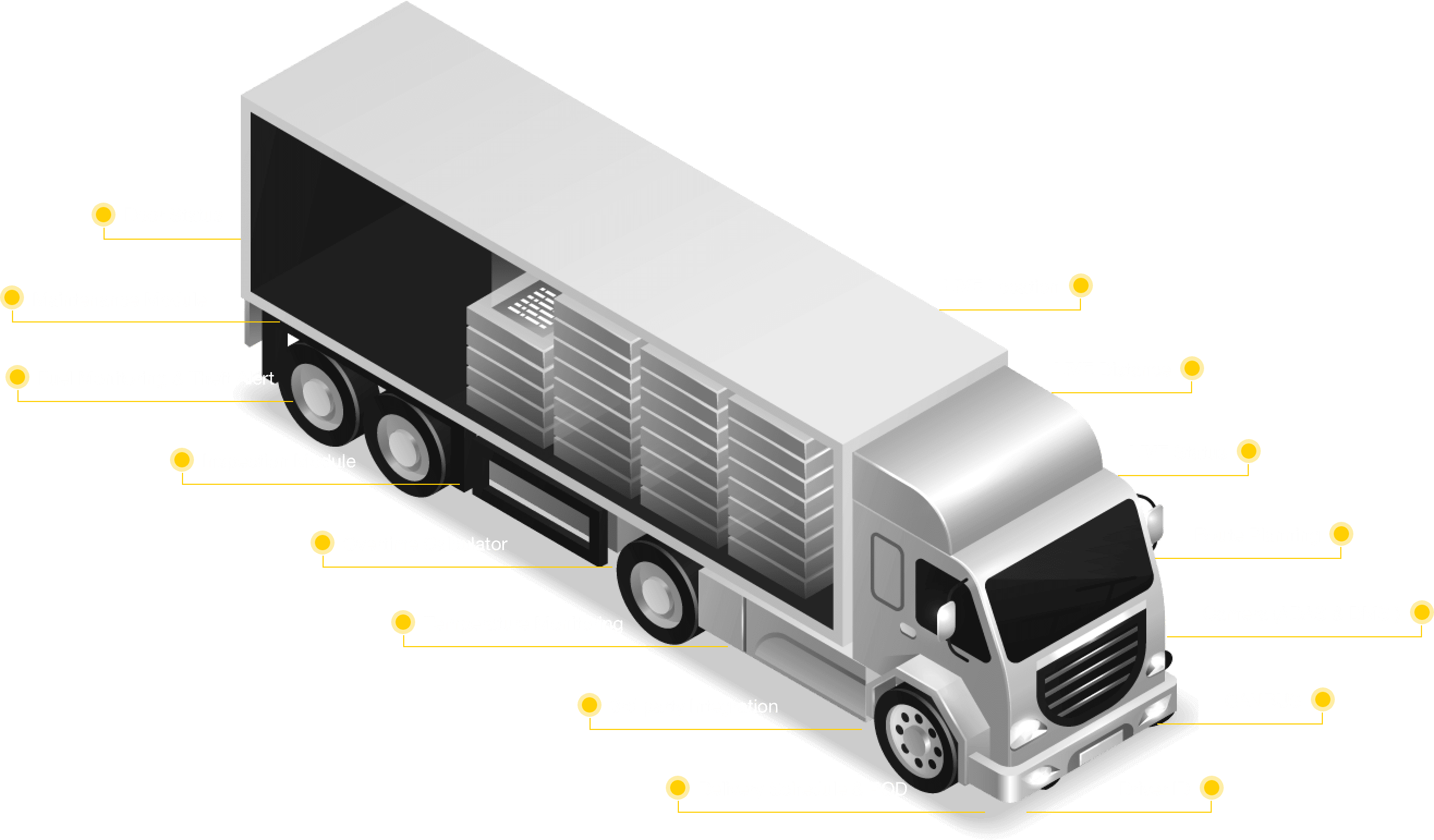
The United Arab Emirates has long positioned itself as a global logistics and transportation hub, connecting Asia, Europe, and Africa through an advanced network of ports, highways, and industrial zones. As trade volumes and domestic freight movement continue to expand, the movement of trucks across emirates has become both a backbone of economic activity and a growing challenge for road safety, traffic management, and regulatory oversight. In response, National System for Tracking Trucks in the UAE, a centralized digital framework designed to monitor, regulate, and optimize truck movement across the country in real time.
In its early operational phase, the national truck tracking system recorded more than 500,000 registered commercial trucks, collectively traveling over 20 million kilometers per month across federal and local road networks. Data collected through the system showed a 22% reduction in major traffic violations involving heavy vehicles. In comparison, logistics operators reported an average 15% improvement in delivery efficiency due to better route planning and reduced delays at checkpoints. Authorities also observed a measurable decline in unauthorized truck movements during restricted hours, particularly in densely populated urban areas.
Why the UAE Needed a National Truck Tracking System
The rapid pace of economic development in the UAE has significantly increased demand for freight transport. Mega infrastructure projects, expanding e-commerce activity, and the growth of free zones have placed additional pressure on road networks. Traditionally, truck monitoring relied on fragmented systems operated by individual emirates or private fleet operators, which limited visibility and coordination at the national level. This fragmentation made it difficult to enforce unified regulations, respond quickly to incidents, or accurately assess the overall impact of freight movement on traffic congestion and road safety.
A national system was therefore necessary to bridge these gaps. By creating a single platform that integrates data from trucks operating across all emirates, authorities gained the ability to monitor movements consistently, apply regulations fairly, and plan infrastructure improvements based on real usage patterns rather than estimates. The system aligns with the UAE’s broader vision of smart mobility and digital governance, where data-driven decision-making plays a central role.
How the National Truck Tracking System Works

At the core of the system is a combination of GPS tracking devices, digital permits, and centralized monitoring dashboards. Trucks registered within the system are equipped with tracking units that continuously transmit location, speed, route, and operational status. This information is securely shared with relevant transport authorities, allowing them to view truck movements in real time and analyze historical data when needed.
The system is designed to integrate seamlessly with existing transport platforms, including traffic management centers and licensing databases. This integration ensures that only authorized vehicles operate on designated routes and during permitted hours. Automated alerts are generated when a truck deviates from approved routes, exceeds speed limits, or enters restricted zones, enabling timely intervention without the need for constant manual enforcement.
Enhancing Road Safety and Reducing Accidents
One of the most significant benefits of National System for Tracking Trucks in the UAE is its contribution to road safety. Heavy vehicles are involved in a disproportionate number of severe traffic accidents due to their size, weight, and longer stopping distances. By monitoring driver behavior and vehicle performance, authorities can identify risky patterns such as excessive speeding, prolonged driving without rest, or repeated route violations.
Over time, this data supports targeted safety campaigns and regulatory adjustments. Transport companies are also encouraged to adopt safer driving practices, as performance metrics are transparent and measurable. The result is a safer road environment not only for truck drivers but also for private motorists who share the highways with heavy vehicles.
Improving Traffic Flow and Urban Mobility

Truck congestion has long been a concern in major UAE cities, particularly during peak hours. The national tracking system enables more effective enforcement of time-based restrictions that limit truck access to certain roads during busy periods. Instead of relying solely on physical checkpoints, authorities can now monitor compliance digitally, reducing unnecessary delays while maintaining control.
By analyzing aggregated movement data, planners can also identify bottlenecks and high-demand corridors. This insight supports better scheduling of freight movement, encourages the use of alternative routes, and informs future road expansion projects. Over time, these measures contribute to smoother traffic flow and reduced congestion in urban centers.
Supporting Logistics Efficiency and Economic Growth
For logistics operators, the National System for Tracking Trucks in the UAE is not merely a regulatory tool but also a catalyst for operational improvement. Real-time visibility into fleet movement allows companies to optimize routes, reduce fuel consumption, and improve delivery accuracy. Delays caused by uncertainty at checkpoints or inconsistent enforcement are minimized, creating a more predictable operating environment.
This efficiency has a direct economic impact. Faster and more reliable freight movement lowers operational costs, enhances supply chain resilience, and strengthens the UAE’s competitiveness as a regional logistics hub. Small and medium-sized transport companies, in particular, benefit from standardized rules and clearer guidance on compliance requirements.
Data-Driven Policy and Sustainable Transport Planning
Beyond day-to-day operations, the National System for Tracking Trucks in the UAE provides a valuable foundation for long-term transport planning. The vast amount of data generated offers insights into freight demand trends, peak usage periods, and the environmental impact of heavy vehicle movement. Policymakers can use this information to design regulations that balance economic needs with sustainability goals.
By identifying routes with high emissions or frequent congestion, authorities can promote the use of cleaner vehicles, adjust infrastructure design, or encourage multimodal transport solutions. In this way, the system supports the UAE’s broader commitment to sustainability and reduced environmental impact without compromising economic growth.
Building Trust Through Transparency and Compliance
A key strength of the national system lies in its transparency. Clear rules, consistent enforcement, and accessible data reduce ambiguity for transport operators and drivers. Compliance becomes easier when expectations are well-defined and uniformly applied across all emirates.
This transparency also builds trust between regulators and the private sector. Rather than relying solely on punitive measures, the system encourages collaboration, with data serving as a shared reference point for improvement. Over time, this approach fosters a culture of accountability and professionalism within the freight transport industry.
Conclusion of National System for Tracking Trucks in the UAE
The National System for Tracking Trucks in the UAE represents a major milestone in the UAE’s journey toward smart, integrated transport management. As technology continues to evolve, the system is expected to incorporate advanced analytics, artificial intelligence, and predictive modeling to further enhance safety and efficiency.
By unifying oversight, empowering logistics operators, and supporting data-driven policy, the UAE has set a strong example of how digital infrastructure can transform road freight management. The system not only addresses current challenges but also lays the groundwork for a future where mobility, safety, and economic growth move forward together.